← All postsPetrol pumps6 min readSample post5 numbers every petrol pump owner should check before closing the day
Fuel sold, cash in hand, credit slips, tank dips and salesman short or excess. What each one tells you, and what to do when it looks wrong.
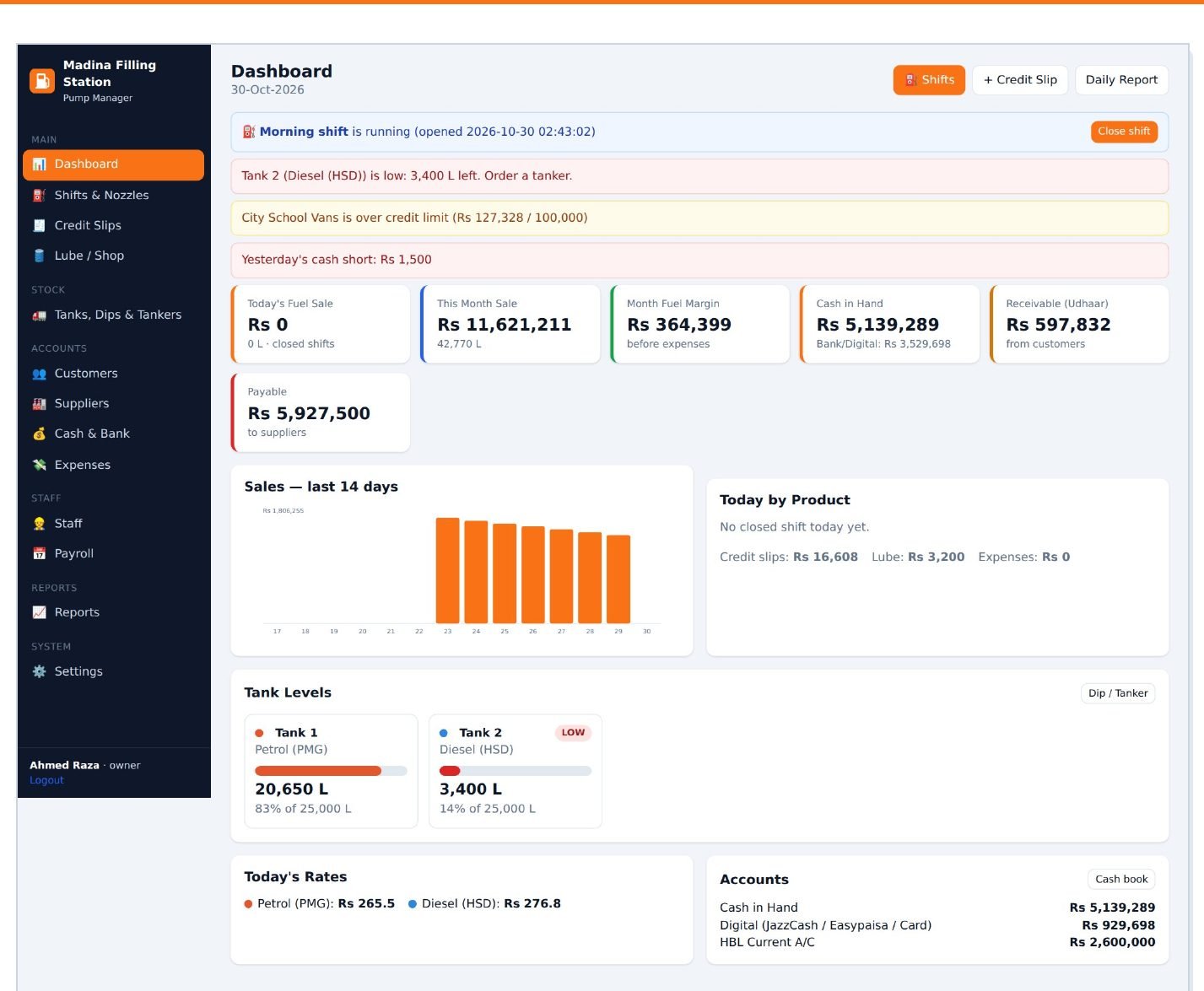
1. Litres sold per nozzle
Compare the opening and closing reading of every nozzle with the litres recorded in sales. A gap of more than a few litres on one nozzle usually means a missed entry, a meter problem or a test fill that was not logged.
2. Cash in hand against expected cash
Expected cash is fuel sales plus lube and shop sales, minus credit slips and digital payments. If the drawer is short, check credit slips first. Most shortages are slips written but not entered.
3. Credit slips issued today
Look at who took fuel on credit and whether any customer has crossed their limit. A daily glance stops small balances from becoming large bad debts at month end.
4. Tank dip against book stock
The dip reading should match the stock in the books after today's sales and any tanker received. A small difference is normal from temperature. A growing difference over several days needs a check of the tank and the nozzles.
5. Salesman short or excess
Track short and excess per salesman over the month, not just per day. One bad day happens. A pattern tells you where training or supervision is needed.
How Smart Pump helps
Smart Pump shows all five numbers on one screen at the end of every shift, and sends the day closing to the owner's phone. Nobody has to add up registers at midnight.
See it on your own business.
Free demo online, at your office, or as a 14-day trial.
How to stop double bookings in wedding season
One date, two parties, one very awkward phone call. Here is how halls keep a clean calendar when every weekend is in demand.
Why double bookings happen
Most clashes come from two people writing bookings in two places: a register at the counter and a phone call answered at home. Tentative bookings that were never confirmed or cancelled make it worse.
Keep one calendar
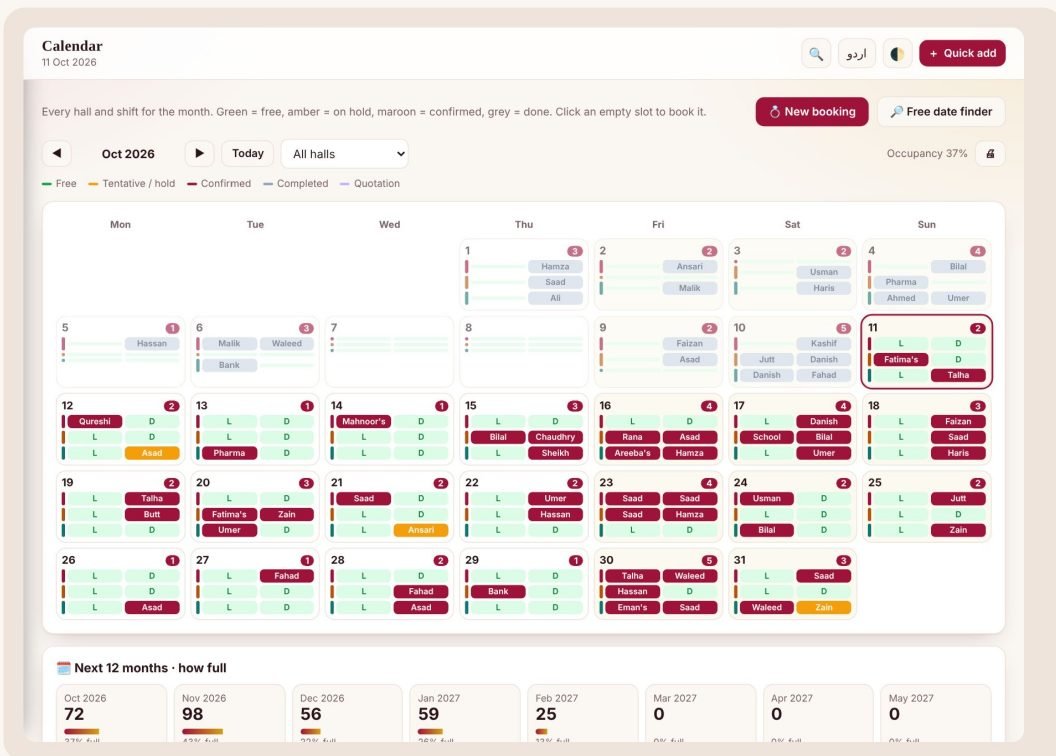
Every hall, every shift, in one place that everyone checks before saying yes. Day and night shifts should be separate, and each booking should show if it is confirmed or tentative.
Give tentative bookings an expiry
Hold a date for a fixed number of days. If the advance is not paid by then, the date opens again automatically.
Check before you promise
When a client calls, search the date first. If it is taken, offer the nearest free dates on the same call instead of calling back later.
How SI Tech Marriage Hall helps
The booking calendar warns about a clash before saving, the date check shows free halls in two seconds, and the client gets a WhatsApp link to see their own booking and dues.
See it on your own business.
Free demo online, at your office, or as a 14-day trial.
Rush hour at the counter: billing faster without mistakes
Long queues lose customers. Small habits and the right counter setup can cut billing time without letting errors slip in.
Scan, do not type
A hand scanner or even a phone camera removes most typing mistakes. Keep barcodes on loose items with a shelf label.
Keep several bills open
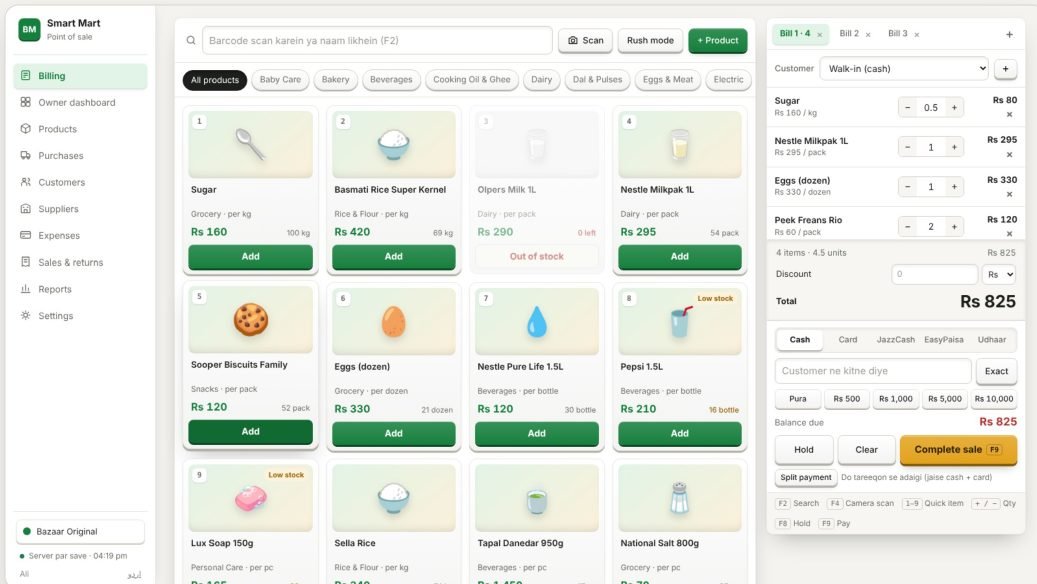
When a customer goes back for one more item, hold the bill and serve the next person. Come back to the first bill when they return.
Quick buttons for common items
Bread, eggs and milk sell all day. Put them on number keys so the cashier adds them with one press.
Separate digital payments
Record JazzCash, EasyPaisa and card on their own lines so the cash drawer always matches at closing.
How Smart Marts helps
Rush mode hides everything except products and the bill, up to ten bills can stay open, and keyboard shortcuts cover search, camera scan, hold and pay.
See it on your own business.
Free demo online, at your office, or as a 14-day trial.